Guide · around Château du Boscau
Carennac
Carennac from the château (8 km)
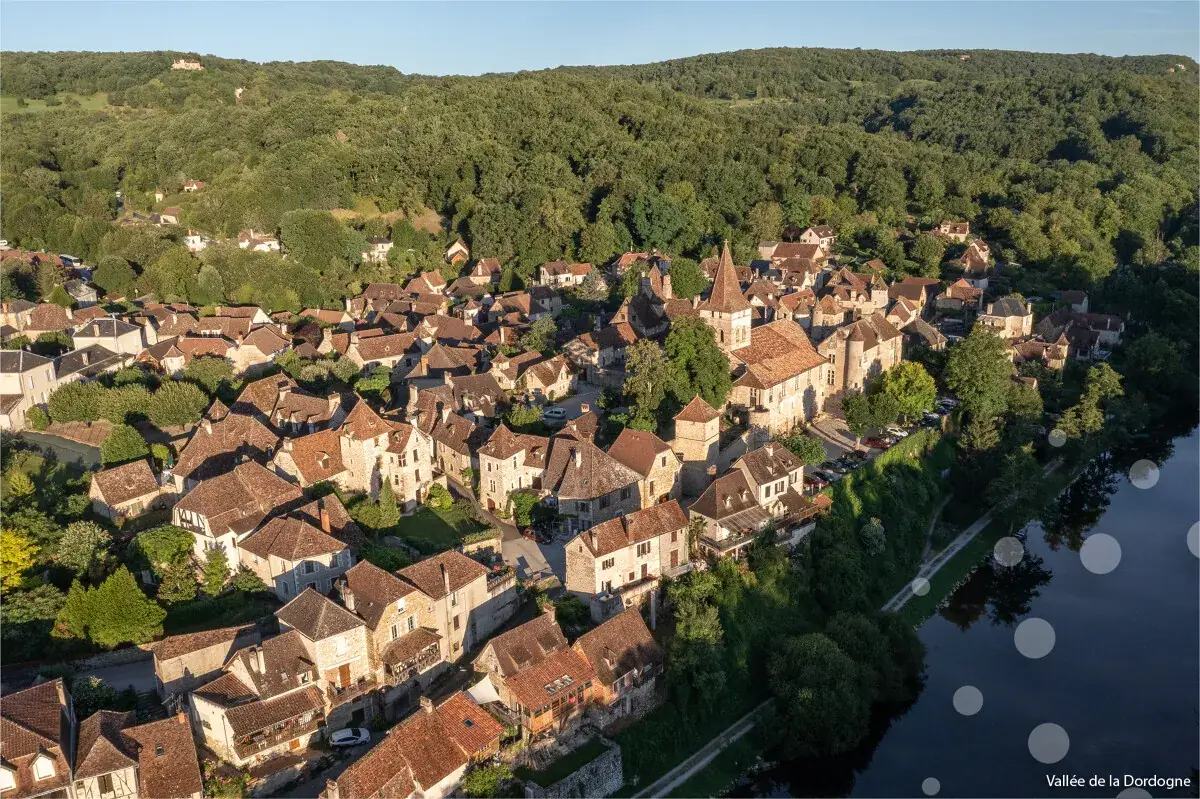
Carennac lies 8 km from Château du Boscau, high above a loop of the Dordogne on the edge of the Haut-Quercy. A Romanesque priory church, a cloister and a Renaissance château stand close together around a small square: reason enough for the village to call itself one of the most beautiful villages in France. You come for the church and the cloister, for the walk along the river, and because it’s close enough for a relaxed afternoon with no need to rush.
The village has around 420 inhabitants and, as well as the “Most Beautiful Villages of France” label, holds the title Pays d’Art et d’Histoire: a small village with a great deal of history packed into very few square metres.
Carennac also has its own link to our château: Gilles del Bosc, the monk who built Boscau around 1450, was dean of the priory here.
From the château it’s just over ten minutes’ drive: a short trip through the Dordogne valley, perhaps catching a glimpse of Loubressac or Autoire on the way, both of which also feature on our list of places to visit nearby.
What you'll see
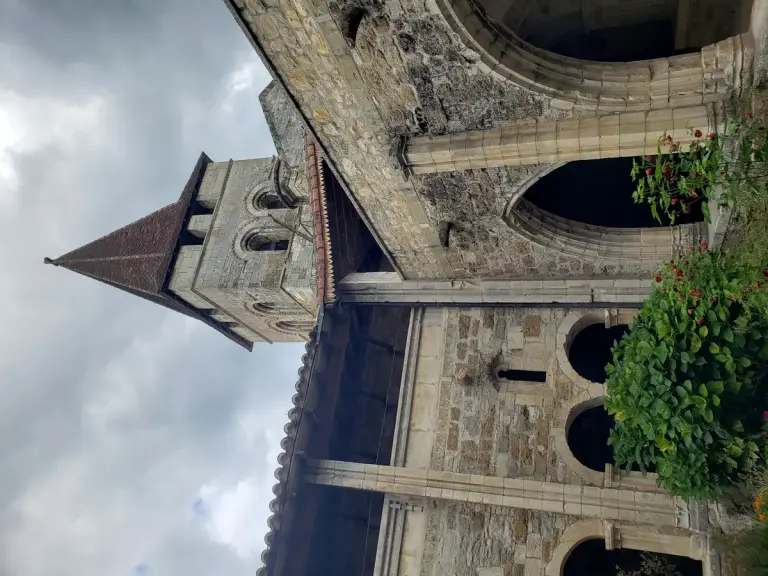
From the 11th century onwards, Carennac grew up around a priory of the Cluniac order, one of the largest monastic orders in medieval Europe, whose vast network of monasteries was run from the abbey of Cluny in Burgundy. The church of Saint-Pierre, from the same period, has a carved tympanum above the doorway showing Christ in Majesty, surrounded by the symbols of the four Evangelists. Inside is a 15th-century Gothic Entombment of Christ, with remarkably fine detail.
Right next to the church is the cloister, whose galleries combine Romanesque and late-Gothic styles; for centuries this was where the priory’s monks lived. Beside it stands the Château des Doyens, the Renaissance residence of the priory’s deans, with a painted 17th-century ceiling and a permanent exhibition on the history of the village.
Fénelon was prior of Carennac from 1681 to 1685. As Archbishop of Cambrai and tutor to a grandson of Louis XIV, he later won worldwide fame with his book “Les Aventures de Télémaque” (The Adventures of Telemachus), one of the most widely read books of the 18th century.
A number of contemporary potters and sculptors have also set up their studios around the priory: the village has attracted artists and craftspeople for centuries, from the medieval stonemasons who built the cloister to the present day.

Walking and canoeing along the Dordogne
From the village, a footpath runs along the river, with views of the cloister tower and the old houses by the water: a gentle walk of half an hour to an hour, depending on how far you go. If you have more time, a waymarked 13 km trail (just over three hours) follows the Dordogne before climbing to the edge of the Causse de Gramat and the ruins of the Château de Taillefer, with views over the valley and the little island of Calypso in the river.
If you’d rather be on the water, Carennac Aventure rents out canoes and kayaks for a trip on the Dordogne, on your own or with the whole family.
You can swim at La Saule, an unsupervised natural riverbank just outside the village with a picnic spot by the water. There are no facilities, but it’s a lovely place to cool off after a walk.
With children: parking and the water park at Bétaille
There are three car parks at the entrance to the village: P1 is free, while you pay to park in P2 and P3. With children, a short walk around the village is usually enough for a morning, with the cloister and the Entombment as the main attractions; if you want to stay out longer, there’s a water park with slides and a paddling pool a little further on, at Bétaille.
When to go
In July and August the narrow streets get busier and the paid car parks at the entrance (P2 and P3) fill up more quickly. Outside the high season you’ll often have the cloister almost to yourself, and there’s usually space in the free P1 car park too. For walking or canoeing, spring and autumn are more pleasant: less heat, and fewer people on the water.

Aim to be in Carennac around lunchtime. The best place to park is in the shade at car park P3, on the edge of the village.
Combine with
Carennac lies between two places covered in our other guides: Autoire and Loubressac (6 km) and Saint-Céré, Montal and Presque (8 km). You can combine either with a visit to Carennac in half a day, or browse them separately on our area page.
For a day trip further afield, Carennac also combines well with Rocamadour or the Gouffre de Padirac, both easy to fit in on the way back to the château. For a quieter day without much driving, Carennac on its own pairs nicely with a walk or a canoe trip on the Dordogne.
For lovers of ancient history: near Vayrac, a little further on, lies the Puy d’Issolud, identified by archaeologists as Uxellodunum, where the Gauls made their last stand against Caesar in 51 BC.
We recommend starting with a leisurely walk through the village. Begin down by the Dordogne and work your way up. Don’t miss the old priory: around 1450 its dean, Gilles del Bosc, commissioned the building of our Château du Boscau. Its church is well worth a look too.
Where to stay near Carennac
Château du Boscau is 8 km from Carennac, just over ten minutes’ drive. You can choose from three stays: Gilles del Bosc, the self-catering apartment for 4 with 2 bedrooms, where your dog is welcome too; Louis IX, the upstairs self-catering apartment for 2, where pets are also welcome; and Jean Mouliérat, our B&B room for 2 with its own bathroom.
Whichever you choose, by arrangement we serve a three-course dinner of local and organic produce as our table d’hôtes, or you can enjoy a pot of tea and something sweet in our own tea garden after a day in Carennac.
Our absolute favourite is Chez Paul. Relaxed, on the little terrace out front, or cosily indoors when the weather is less kind. A simple but very good menu and friendly service. Both of them speak good English too, which makes things that little bit easier.
Carennac suits every stay
Pick one of the stays as your base, and make Carennac part of your time in the Lot.