Guide · around Château du Boscau
Saint-Céré, Montal and Presque
Saint-Céré from the château (8 km)
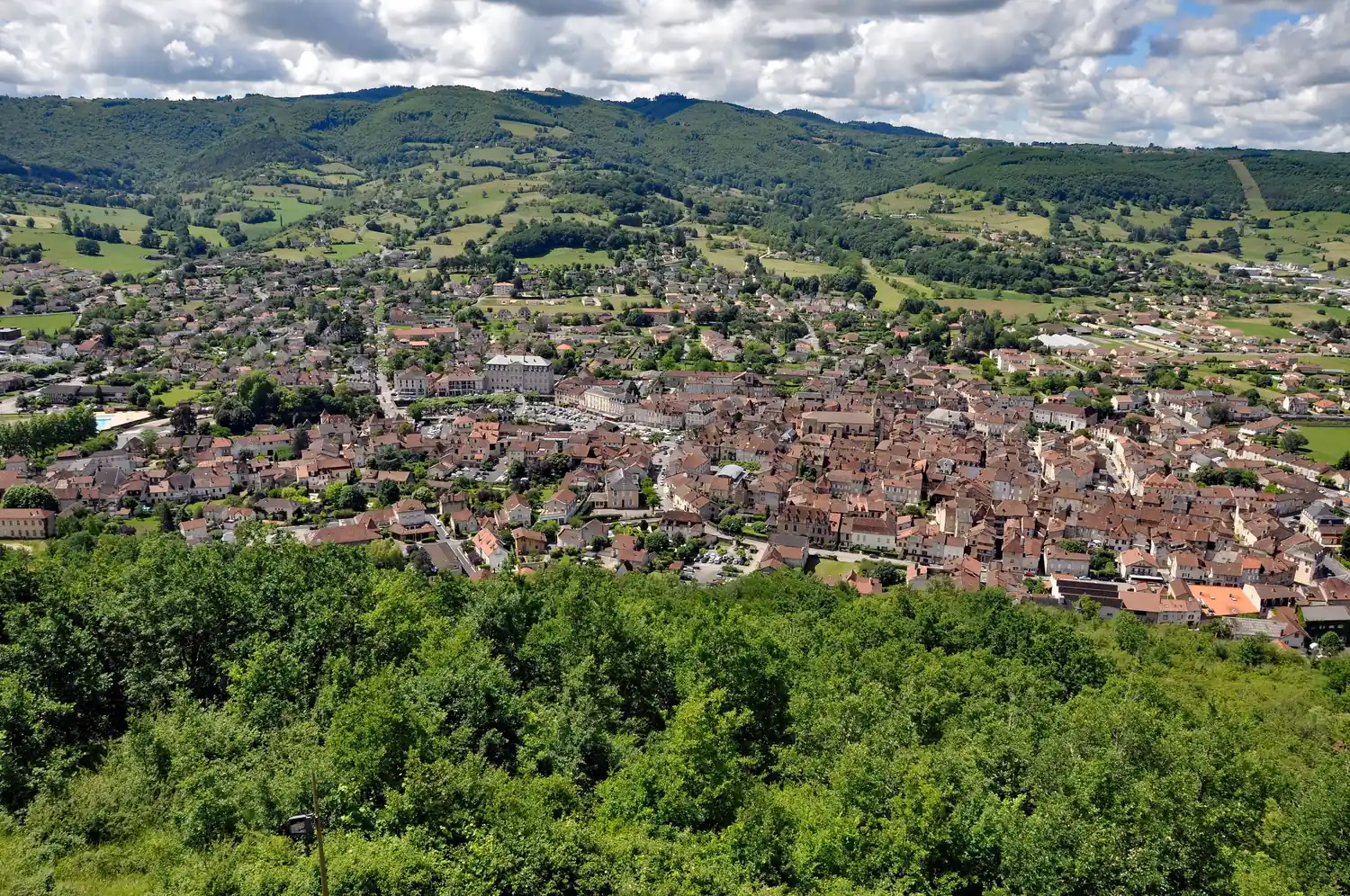
Saint-Céré lies 8 km from Château du Boscau, at the foot of the Ségala hills. It’s a market town with a medieval centre, little canals that earned it the nickname “Little Venice of the Lot”, and two sights just a stone’s throw away: the Renaissance château of Montal and the stalactite caves of Presque. You come for the town itself, and can take in Montal or Presque the same afternoon.
With over 3,400 residents, Saint-Céré is the largest town in this series of guides, and it holds the title “Plus Beau Détour de France”, a label for small towns full of character just off the usual tourist trail.
What you'll see
The medieval centre revolves around the Place du Mercadial, the town’s old trading square: half-timbered houses, arcades and the 15th-century Maison des Consuls, where the town council once sat.
In 1611 the town council commissioned a Dutch engineer known as Van Dome to dig a network of small canals, to hold back the floods of the River Bave and supply the mills and workshops with water. Most were later covered over, but along the rue du Faubourg-Saint-Clément one canal still flows in the open: hence the nickname “Little Venice of the Lot”.
On a hill above the town stand the two towers of the château of Saint-Laurent-les-Tours, visible from afar and the starting point of the next section. The town itself also has the Romanesque church of Sainte-Spérie, with Gothic additions, and the 17th-century church of the Récollets.
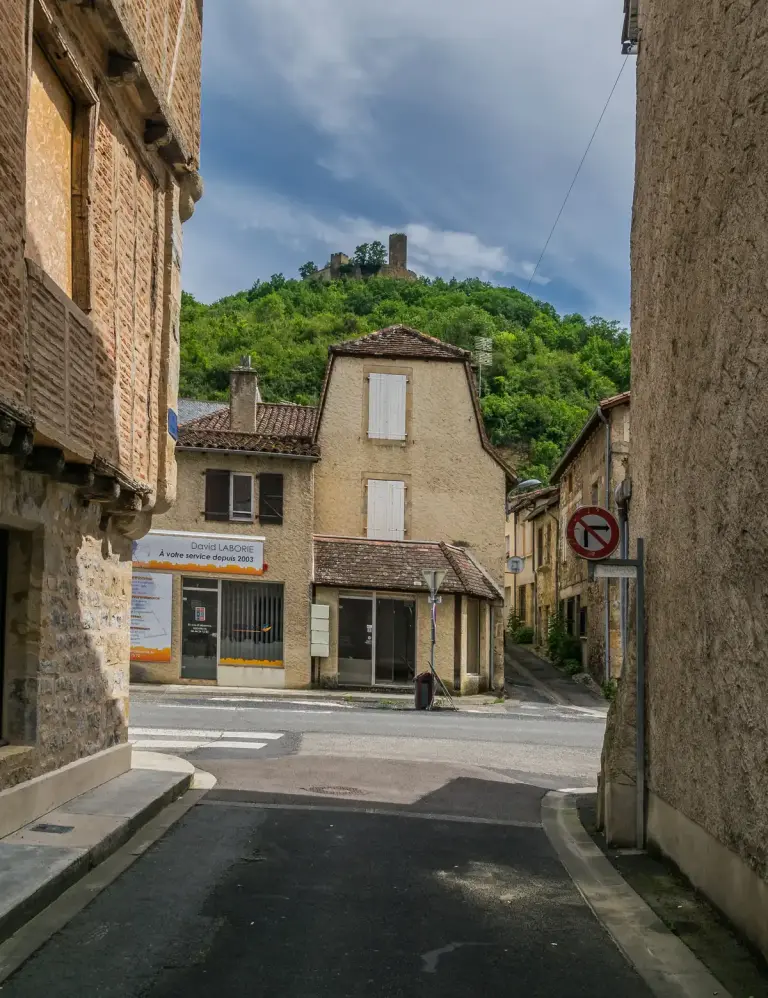

The towers of Saint-Laurent and Jean Lurçat
The château of Saint-Laurent-les-Tours is a medieval fortress of which chiefly the two round towers survive. After the Second World War the artist Jean Lurçat, known as a pioneer of modern tapestry, settled here; he also produced paintings and ceramics. The studio-museum in the château displays part of his work.
The photographer Robert Doisneau and the writer Pierre Benoit also drew inspiration from Saint-Céré: a small town with a remarkably large artistic footprint.
Every year from late July into early August there’s also the Festival de Saint-Céré, with opera, concerts and theatre at historic venues in and around the town.
Château de Montal, a Renaissance castle (8 km)
Château de Montal, a few kilometres from Saint-Céré, was built between 1519 and 1534 by Jeanne de Balsac d’Entraygues. Widowed in 1510 by the death of her husband, Amaury II de Montal, she was left alone with five children and had the medieval residence transformed into one of the earliest Renaissance châteaux in France.
The château was never finished: of the four planned wings, only two were built. Jeanne did, however, have carved busts of herself and her family set into the façade, including one of her eldest son Robert, killed in the Italian Wars in 1523: a personal monument in stone.
There’s also a golf course around the château, for anyone who’d rather hit a few balls than join a guided tour.
Grottes de Presque, where your dog can come too (8 km)
The Grottes de Presque, about 5 km from Saint-Céré, were discovered in 1825 while the road between Saint-Céré and Rocamadour was being built, and have been open to visitors since 1922. Inside, you walk past a succession of limestone formations and columns 8 to 10 metres tall, including a cluster of slender, candle-like stalagmites nicknamed “les Bougies” (the candles).
A guided tour takes about 45 minutes, at a constant temperature underground: a pleasant way to cool off on a hot summer’s day. Especially good news for our guests with a dog: four-legged visitors are welcome on a lead, and there are water bowls at the entrance.
When to go
On Saturday mornings there’s a market with regional produce under the old covered hall on the Place Jean Jaurès, and on Sunday mornings a smaller one on the Place de la République.

Saint-Céré is a lively little town with plenty of shops and restaurants, 6 km from our château. Did you know that at the beginning of the seventeenth century the town council of Saint-Céré called in the help of a Dutch hydraulic engineer? The river Bave was causing severe flooding. He designed a large network of canals, which is why the town was also known at the time as la Petite Venise lotoise. If you look carefully, you can still see some of his little canals flowing under houses and behind gardens.
Combine with
Saint-Céré lies close to Carennac (8 km) and Autoire and Loubressac (6 km): three guides you can combine in a single day, or browse separately on our area page.
For a day trip further afield, Saint-Céré also combines well with the Gouffre de Padirac or Castelnau-Bretenoux castle, both on the route back to the château.
Combine a visit to Saint-Céré with the Château de Montal and with the castle of Saint-Laurent-les-Tours, which towers high above the town and houses the museum of tapestry designer Jean Lurçat. Did you know that during the Second World War a large part of the art treasures of Paris was kept safe at the Château de Montal, including the Mona Lisa?
Where to stay near Saint-Céré
Château du Boscau is 8 km from Saint-Céré, about ten minutes’ drive. You can choose from three stays: Gilles del Bosc, the self-catering apartment for 4 with 2 bedrooms, where your dog is welcome too; Louis IX, the upstairs self-catering apartment for 2, where pets are also welcome; and Jean Mouliérat, our B&B room for 2 with its own bathroom.
Whichever you choose, by arrangement we serve a three-course dinner of local and organic produce as our table d’hôtes, or you can enjoy a pot of tea and something sweet in our own tea garden after a day in Saint-Céré.
Our favourite lunch spot in Saint-Céré is C.A.L.M. (Comme à la Maison): delicious coffee and tasty lunch dishes. For a slightly smarter dinner, try restaurant Le Puymule, next to the church.
Saint-Céré, Montal and Presque suit every stay
Pick one of the stays as your base, and make Saint-Céré, Montal and Presque part of your time in the Lot.